
Bullion
Bullion is gold, silver, platinum, or palladium valued primarily for its metal content rather than for rarity, condition, or collector demand.
Bullion is gold, silver, platinum, or palladium held and traded primarily for its metal content rather than for rarity, age, or collector appeal. It comes in bars, rounds, and government-issued coins.
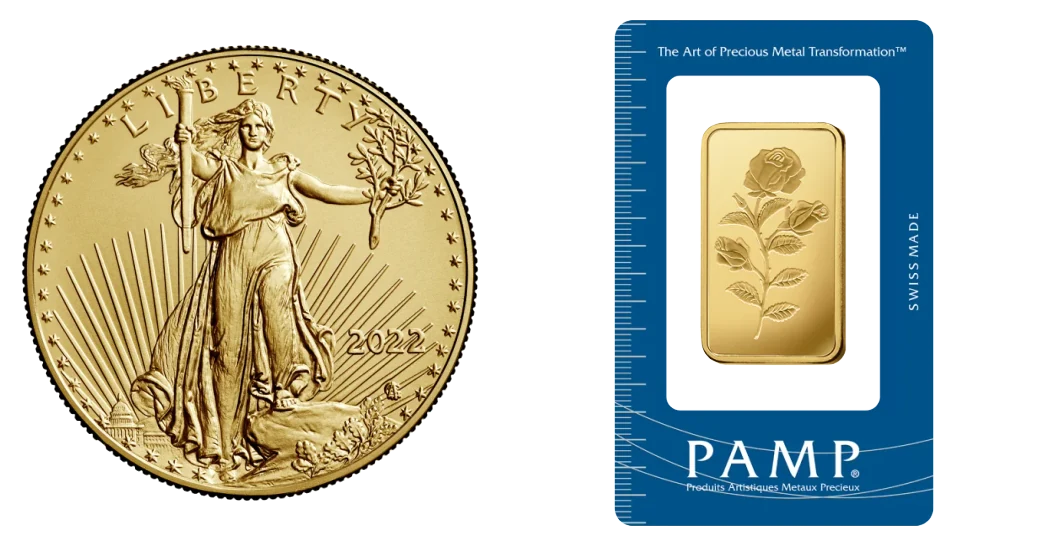
- Coin
- Bar in assay card
Bullion coins are struck specifically to be bought by weight. The American Silver Eagle is one troy ounce of .999 fine silver with a $1 face value. The American Gold Eagle is 22 karat, .9167 fine, alloyed with silver and copper for durability, and the one-ounce version contains a full troy ounce of gold. The American Gold Buffalo is .9999 fine, 24 karat, and one troy ounce. All of them are priced from the spot price of the metal plus a premium.
The distinction between bullion and numismatic coins is not always clean. A common-date pre-1933 $20 double eagle often trades close to its gold content, while a well-preserved example of the same coin trades as a collectible. Modern bullion issues in high certified grades behave the same way.
For most buyers, bullion is the straightforward way to hold metal: recognizable products, transparent pricing, and a ready resale market. Which product fits depends on budget, storage, and whether the metal is intended for an IRA. A Texas Bullion Exchange specialist can talk through the options with you.