
Proof Coin
A proof coin is struck with specially prepared dies and planchets, usually more than once, to produce a mirrored field and sharply detailed design.
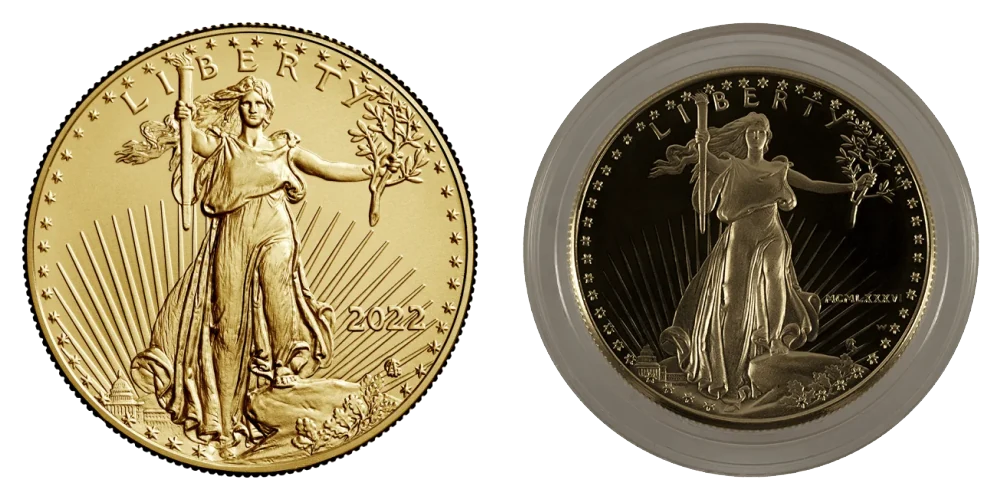
A proof coin is a coin struck using specially prepared dies and polished planchets, usually with more than one blow from the press, to produce a mirrored background and crisply raised design details. Proof describes a method of manufacture, not a grade.
- Bullion
- Proof
The US Mint sells proof versions of its main bullion programs, including the American Silver Eagle, American Gold Eagle, American Gold Buffalo, and platinum and palladium Eagles, along with proof commemoratives. They are issued in mint packaging with a certificate of authenticity, produced in smaller numbers than the bullion strikes, and carry a higher premium as a result.
Proof coins are graded on the same 1 to 70 scale as business strikes, but with a PF or PR prefix instead of MS. A perfect proof is PF70, the counterpart to MS70 on a bullion strike.
Handling matters more with proofs than with any other product. Mirrored fields show fingerprints, hairlines, and spots readily, and damage to the surface cannot be undone. Collectors who intend to keep proofs long term often have them encapsulated as a certified coin so the grade is documented and the surfaces are protected.
If you are deciding between proof and bullion versions of the same coin, a Texas Bullion Exchange specialist can explain the practical differences.