
Sheldon Scale
The Sheldon scale is the 1 to 70 numeric grading system used for US coins, with 70 representing a coin showing no post-production imperfections.
The Sheldon scale is the 1 to 70 numeric system used to grade US coins, where 1 describes a barely identifiable piece and 70 describes a coin with no post-production imperfections. It is the standard both NGC and PCGS grade to, which is why numbers from the two services are directly comparable.
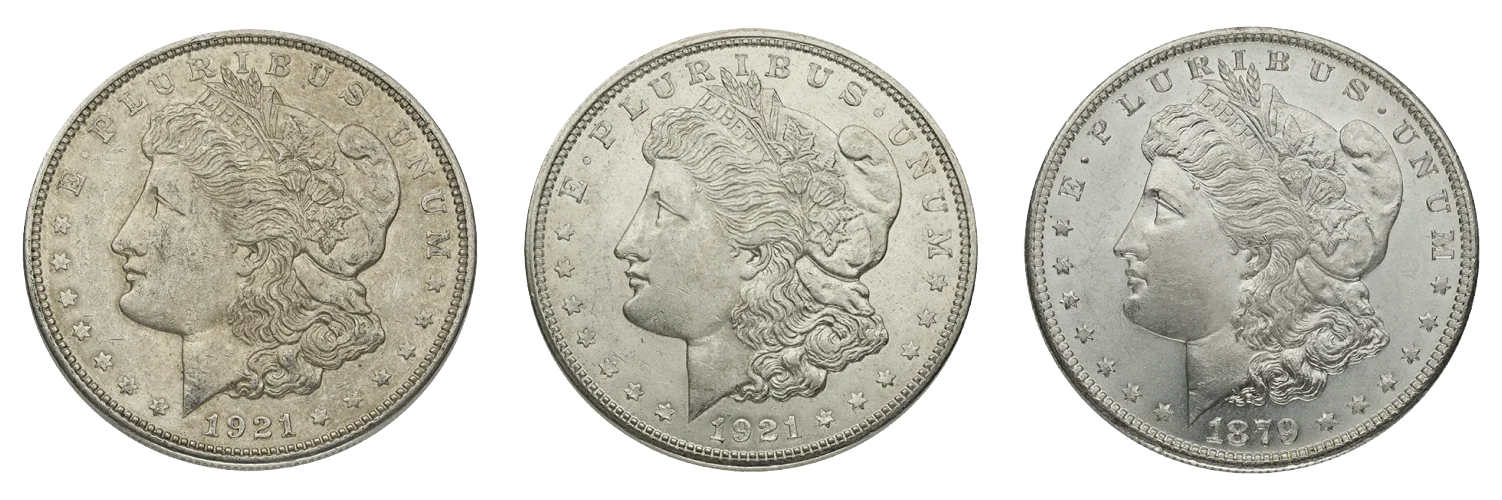
- Very Good
- About Uncirculated
- Brilliant Uncirculated
Numbers on their own are incomplete. A prefix identifies the coin's category: MS for Mint State on a business strike that never circulated, PF or PR on a proof coin. Circulated coins carry descriptive designations at the lower end of the range rather than a mint state prefix.
The scale is not evenly spaced in terms of what buyers pay. At the upper end, the difference between one point and the next reflects small surface differences that only matter under magnification, yet those points can change what a coin is worth considerably. That is why MS70 attracts so much attention on modern American Eagles.
For gold and silver dollars and larger, the scale is most useful as a shared language. A grade assigned by a third party and sealed in a holder lets a buyer in another state price a Morgan dollar or a pre-1933 $20 double eagle without handling it.
A Texas Bullion Exchange specialist can explain how grade affects a coin you own.