
Gold IRA Basics
How a self-directed IRA holding physical gold and silver works, who the required parties are, which metals qualify, and what to ask before opening one.
A gold IRA is a self-directed individual retirement account that holds physical precious metals instead of paper assets. The account is an ordinary IRA under the tax code; what distinguishes it is that the custodian permits physical metal as a holding, and the metal is stored at a depository that meets IRS custody requirements rather than by the account owner. Buying, selling, funding, and distributing all happen inside the account, through the custodian.
This page is educational information only. It is not tax or legal advice. Texas Bullion Exchange does not provide tax or legal advice — the description below is general, and how any of it applies to you is a question for your own tax professional.
Who the required parties are
Three separate entities are involved, and each has a distinct job. Understanding the division of labor removes most of the confusion around how these accounts work.
The custodian or trustee. This is the financial institution that holds the account. It opens the IRA, accepts funding, keeps the records the IRS requires, executes the purchase instructions you give, issues the annual reporting, and processes distributions. An IRA must have a qualified custodian; the account owner cannot serve as their own. Not every custodian handles physical metals, so the ones that do are a specialized subset, often called self-directed IRA custodians.
The dealer. This is where the metal is actually bought and sold. The custodian moves the money and holds the account, but it does not set coin prices or source inventory. You or your specialist select the products, the dealer quotes them, and the custodian pays the dealer from the IRA's funds. When you eventually sell, the same relationship runs in reverse: the dealer buys the metal and the proceeds return to the IRA.
The depository. This is the vault facility that physically holds the metal. It must be an approved trustee or depository under the tax code. The depository receives the shipment from the dealer, verifies it, stores it, and reports holdings to the custodian.
The account owner directs all of it and owns the assets, but does not personally touch the metal at any point during the life of the account.
Why the metal cannot be kept at home
The requirement that IRA metals be held by an approved trustee or depository is the single rule people most often get wrong. Personal possession of metal owned by your IRA is treated as a distribution from the account, with whatever tax consequences follow from that.
You will see arrangements marketed under names like home storage IRA or checkbook LLC IRA, which propose holding IRA-owned metal in a safe at a residence or in a bank box controlled by an entity you manage. These structures have drawn scrutiny. Before going anywhere near one, get an opinion from your own tax professional rather than from the person selling it to you.
The practical rule is simple. The metal goes from the dealer directly to the depository. You receive statements, not shipments.
Storage options at the depository
Depositories generally offer two arrangements. Segregated storage keeps your specific coins and bars physically separate from other holdings, and the items returned to you on distribution are the same items you bought. Commingled or allocated storage holds your metal alongside other accounts' metal of the same type, and you receive equivalent items of the same product and quantity rather than the identical pieces. Both are legitimate. Segregated storage generally costs more. If you care about receiving the exact coins back in an in-kind distribution, ask which arrangement the depository is providing and get it stated plainly.
Which metals qualify
The tax code sets minimum fineness levels for metals an IRA may hold:
- Gold: .995 or finer
- Silver: .999 or finer
- Platinum: .9995 or finer
- Palladium: .9995 or finer
Fineness is the proportion of the coin or bar that is the precious metal itself, expressed as a decimal.
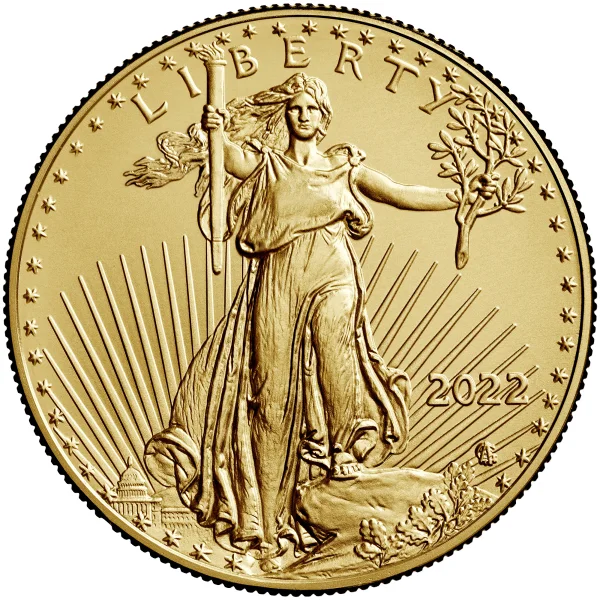
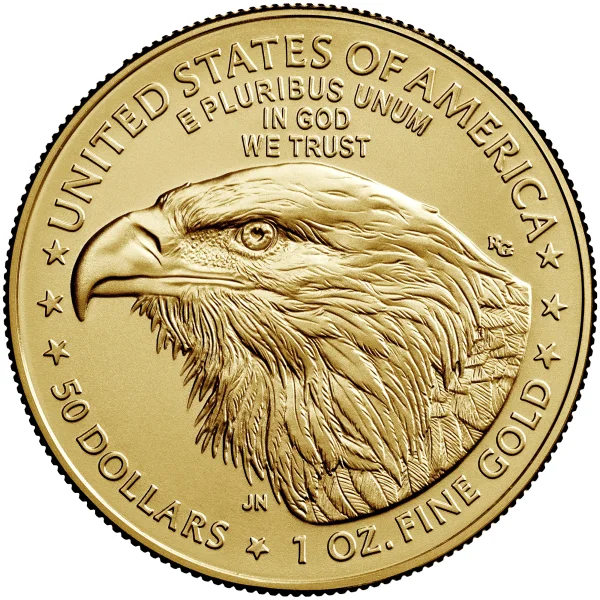
There is one well-known exception. The American Gold Eagle is 22 karat, which is .9167 fine, and would fail the .995 gold minimum on its face. It is admitted by specific statutory language rather than by meeting the fineness test. The result is that the American Gold Eagle is IRA-eligible despite its alloy, and it remains one of the most commonly held coins in these accounts.
Beyond fineness, the item generally has to be produced by a national government mint or by a refiner, assayer, or manufacturer that meets recognized accreditation standards. Collectible and numismatic coins are excluded. Which specific coins clear the test is covered in our overview of IRA-approved gold coins.
How these accounts get funded
There are three general routes into a precious metals IRA, and most accounts are opened using the first two.
Transfer from an existing IRA. Money moves directly from one IRA custodian to another without passing through your hands. This is the most common path, and it is generally the cleanest administratively because the funds never leave the IRA system.
Rollover from an eligible employer plan. Funds from a qualifying workplace retirement plan move into the IRA. Whether a given plan permits this, and under what conditions, depends on the plan itself and on your employment status with that employer.
Annual contribution. You may also fund the account with regular contributions, the same as any IRA.
Rules govern how each of these routes works, and they turn on facts about you that a web page does not have. Those are exactly the points to raise with your own tax professional rather than settle from an article.
Traditional versus Roth treatment
A precious metals IRA can generally be set up under either traditional or Roth rules, and the choice works the same way it does for any other IRA. The metal held inside the account makes no difference to that choice.
Traditional and Roth accounts are treated differently from one another, and which one suits you depends on facts about your income, your circumstances, and your timing. That is a tax question rather than a metals question, and it belongs with your accountant. We are not going to characterize it here, because the honest version of the answer is specific to you and we would be guessing.
Fees you should expect to see
Precious metals IRAs carry costs that a brokerage IRA does not, because there is physical property to move and store. The categories are consistent across the industry even though the amounts differ:
- Account setup fee. A one-time charge from the custodian to open and establish the account.
- Custodian or administration fee. An ongoing charge, usually annual, for recordkeeping, reporting, and processing transactions. Some custodians charge a flat amount and some scale it with account value.
- Storage fee. Charged by the depository for holding the metal. Segregated storage typically costs more than commingled. This may be billed through the custodian or separately.
- Transaction costs on the metal itself. When you buy, you pay the dealer's price, which includes a premium over the metal's spot value. When you sell, the dealer's buy price applies. These are not administrative fees, but they are real costs and they belong in the same conversation.
Ask any custodian for the complete fee schedule in writing before opening the account, including what happens at closure and what an in-kind distribution costs to ship and insure.
Taking distributions
Distributions from a precious metals IRA can generally be taken two ways.
A cash distribution means the metal is sold inside the account, usually back to a dealer, and the cash proceeds are distributed to you. This is straightforward and is what most account holders do.
An in-kind distribution means the physical metal itself is shipped out of the depository to you. You receive the coins or bars rather than cash, and the shipping and insurance have to be arranged and paid for. In-kind distributions appeal to people who specifically want to end up holding the coins.
Both are distributions, and both are subject to the ordinary IRA distribution rules. How those rules land for you depends on your account type and your circumstances, so settle that with your tax professional in advance rather than at the moment you need the money.
What to ask before opening one
Before signing anything, get clear answers to the following:
- Who is the custodian, how long have they administered self-directed metals accounts, and what is their complete fee schedule?
- Which depository will hold the metal, where is the facility, and what insurance covers the holdings?
- Is storage segregated or commingled, and what does each cost?
- Which specific coins or bars are being recommended, and why those rather than lower-premium alternatives? Ask what the premium is on each.
- What does the dealer's buyback look like when you eventually sell, and is there a written commitment to bid on what you bought?
- What does it cost to close the account, take an in-kind distribution, or transfer to a different custodian?
- Has your own tax professional reviewed the plan?
Be cautious with any pitch that pushes high-premium or exclusive coins into an IRA, applies pressure about timing, or makes claims about what metals will do. Precious metals in a retirement account are a holding decision, and the sober version of the conversation is the one worth having.
Talk to an IRA specialist
If you are considering a precious metals IRA, the useful next step is a conversation that covers your situation specifically rather than in general. Texas Bullion Exchange staff can explain how the account structure works, which products are eligible, and what the process looks like from funding through storage, and can coordinate with a self-directed custodian on your behalf. Call 855-344-2646 to speak with a specialist. Texas Bullion Exchange does not give tax or legal advice, so please confirm the tax details with your own tax professional before you fund an account.
Many savers hold gold both inside a retirement account and outside one. If that describes you, ask the same specialist about the Principal Protection Program, which locks in the original value of a qualifying gold position.