
Coin Grading and Certification
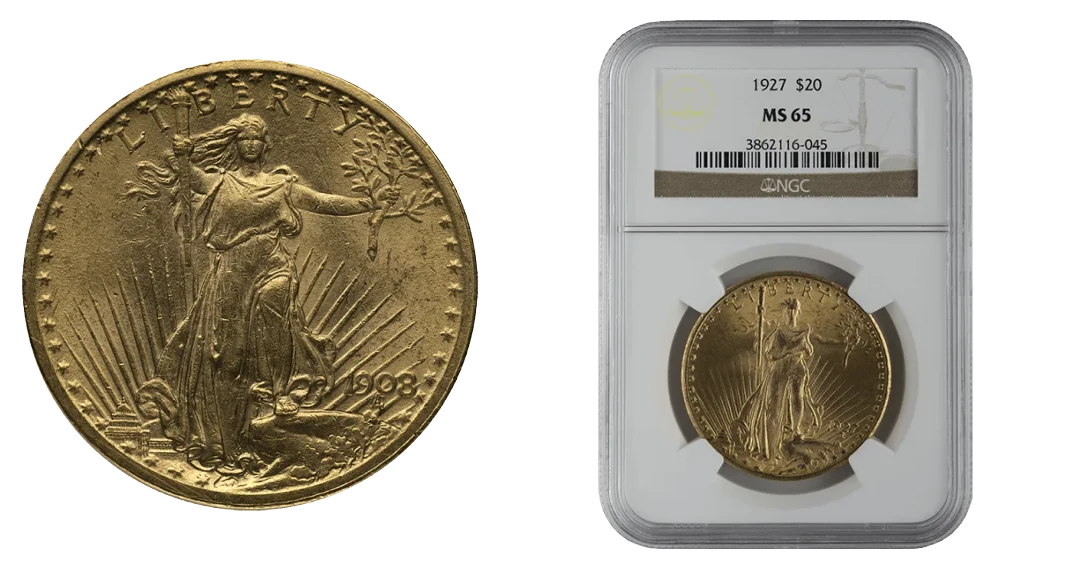
Grading is the process of assessing a coin's condition and expressing it as a number on a standard scale. Certification is what happens when an independent third-party service performs that assessment, confirms the coin is genuine, and seals it in a tamper-evident holder with the grade printed on the label. The two words are often used interchangeably, but they are separate steps, and only the second produces something a buyer on the other side of the country can rely on.
Grades in the US market run on the Sheldon scale, which numbers coins from 1 through 70. Circulated coins occupy the lower range. Uncirculated coins are graded from MS60 through MS70, with proofs graded on the same numbers under a PF prefix. Graders assess strike, luster, surface preservation, and eye appeal, and a single point of difference near the top of the scale can change what a coin trades for.
This pillar covers what each part of the scale actually describes, how the two major services — NGC and PCGS — compare in practice, and the practical decision most owners face: whether to leave a coin raw or send it in. Certification is not automatically the right answer. It costs money and time, and for common bullion held for metal content it usually adds nothing. For a scarce date, a high-grade classic coin, or anything being sold at a distance or divided among heirs, it usually does.
What a certified coin carries with it is evidence rather than assurance: an independent authentication, a grade recorded under a number anyone can look up, and a sealed holder that keeps both attached to the coin. That is why a slabbed coin can be described, priced, and sold to someone who has never held it.
Owners who keep certified gold for the long term often ask how the Principal Protection Program sits alongside it. The program locks in the original value of a qualifying gold position, and what qualifies is a specialist's answer rather than a general one.
Texas Bullion Exchange handles certified coins daily and can tell you whether a specific coin is a candidate for submission. Call 855-344-2646 to speak with a specialist.
Guides in this section
- NGC vs PCGS: How the Two Grading Services Compare
An even-handed look at NGC and PCGS: how submission works, how holders and labels differ, where CAC fits, and what actually matters to a buyer.
- Raw vs Certified Coins: Which Should You Buy?
What raw and certified mean, what certification does and does not guarantee, and when it is worth doing for Morgan dollars, pre-1933 gold, and Eagles.
- The Coin Grading Scale Explained
How the 1-70 Sheldon grading scale works, what MS and PF mean, and how grades apply to Silver Eagles, Morgan dollars, and pre-1933 US gold.