
How to Buy Gold for the First Time
A plain guide to your first gold purchase: choosing a product, understanding sizes and premiums, vetting a dealer, paying, and storing what you buy.
A first gold purchase comes down to four decisions: what you want the gold to do for you, which product fits that purpose, who you buy it from, and where it ends up when the transaction is done. Everything else is detail. This guide walks through those decisions in the order most buyers actually face them.
What do you want the gold to do?
Before you compare products, decide what the purchase is for. Buyers generally fall into one of three groups, and the answer changes what you should buy.
Some people want metal ownership, plain and simple. They want a set number of ounces held in a recognizable form, with the lowest possible cost above the metal price and the easiest possible resale. Others want to build a collection, where the specific coin, its date, its condition, and its certification matter as much as the gold content. A third group wants a mix: a core holding of bullion with a few historic pieces alongside it.
If you are in the first group, buy the most liquid, lowest-premium bullion you can and stop there. If you are in the second, slow down and learn the series before you spend, because condition and authentication drive the outcome far more than metal content does. Most first-time buyers are in the first group, whether or not they realize it at the outset.
Buyers whose main concern is protecting what they put in, rather than trading in and out, often ask about the Principal Protection Program, which locks in the original value of a qualifying gold position. A specialist can tell you what qualifies before you decide what to buy.
Bullion or collectible?
The line between the two is worth understanding early.
Bullion coins are valued primarily on the gold they contain. The market prices them as metal plus a fairly predictable premium. Two identical one-ounce bullion coins in ordinary condition trade at essentially the same price, and the dealer does not need to examine either one closely to make an offer.
Collectible and certified coins are valued on scarcity, condition, and authentication in addition to metal. A certified coin has been examined by a third-party grading service, assigned a numeric grade on the Sheldon scale, and sealed in a tamper-evident holder. That process removes the guesswork about authenticity and condition, which is why certified pieces settle more cleanly in a sale. It also means you are buying two things at once: gold, and a grading opinion.
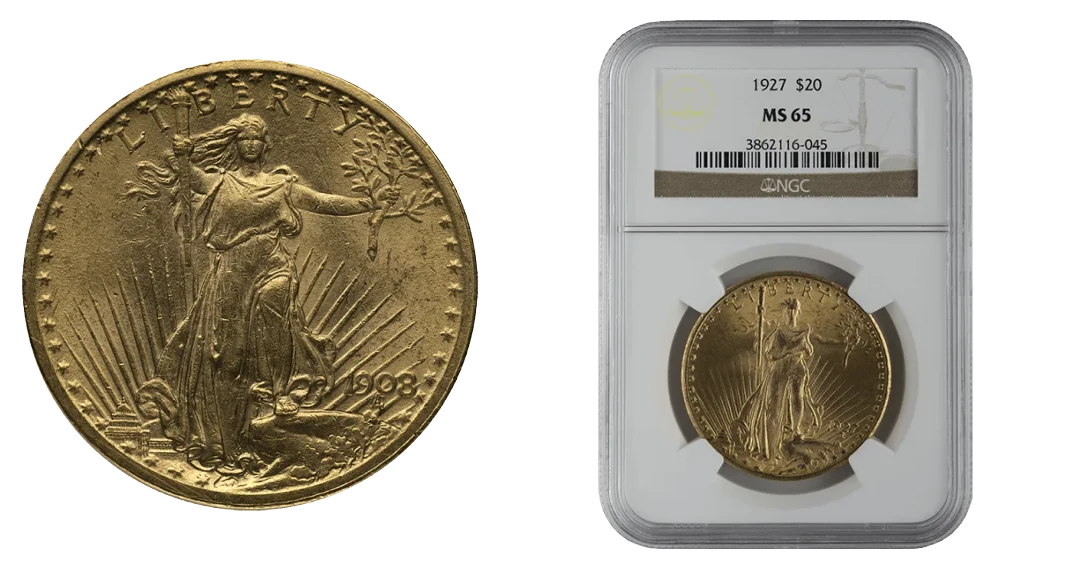
- Raw
- Certified
For a first-time buyer the authentication is usually the part that matters most. Someone with no stake in the sale confirmed the coin is genuine before it was sealed, the holder shows if it has been opened since, and the certification number can be looked up in the service's public database by you or by anyone you later sell to. That is a different footing from taking a description on trust.
Neither category is better than the other. They answer different questions. What causes trouble is buying a collectible at a collector price while believing you bought bullion, then being surprised when the resale conversation is more complicated. Ask the dealer plainly which category a coin falls into.
The main first-purchase options
Almost every sensible first gold purchase in the United States comes from a short list.
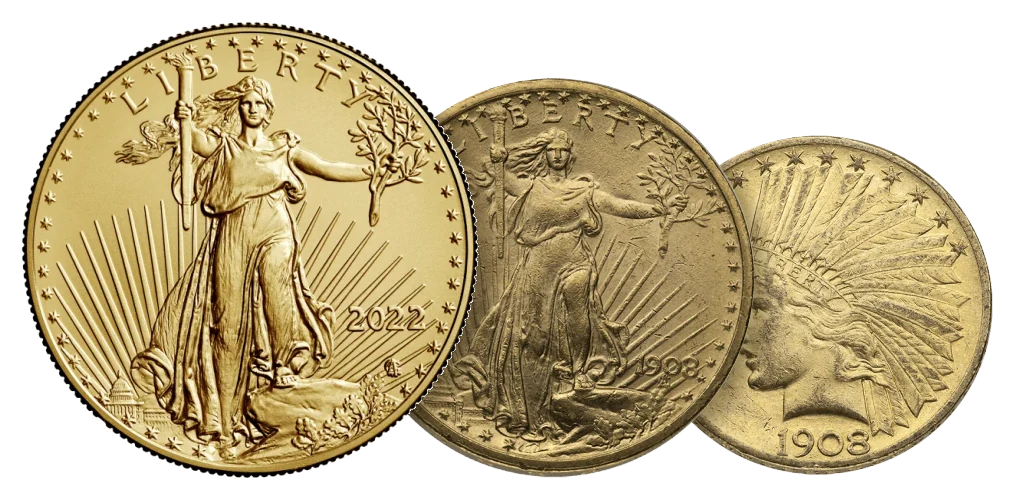
American Gold Eagle. The flagship US bullion coin, struck in 22 karat gold (.9167 fine) alloyed with silver and copper for durability. The one-ounce version contains a full troy ounce of gold and therefore weighs somewhat more than an ounce gross. It is US legal tender. It is the most widely traded gold coin in the country. See the American Gold Eagle guide for the full picture.
American Gold Buffalo. The US Mint's 24 karat option, .9999 fine, one troy ounce of gold. Buyers who want pure gold rather than an alloy usually choose this one. It is softer than the Eagle and shows handling marks more readily, which matters if you plan to store it loose.
Pre-1933 US gold. The $2.50, $5, $10, and $20 denominations struck before 1933, all 90 percent gold. The $20 double eagle contains .9675 troy ounces of gold. These are historic coins that carry both metal value and collector interest, and they sit in the middle ground between bullion and collectible. The pre-1933 US gold overview covers the denominations in detail.
Fractional sizes. Gold Eagles are struck in sizes smaller than one ounce. Fractional coins let you buy in smaller increments and, later, sell a portion of your holding without liquidating a full ounce at a time.
How sizing works, and why fractional costs more per ounce
A one-ounce coin and a fractional coin of the same design require broadly similar work to produce, package, and handle. Dies, striking, inspection, packaging, insurance, and shipping do not shrink in proportion to the metal content. When that fixed cost is spread across a fraction of an ounce instead of a full ounce, the cost per ounce of gold goes up.
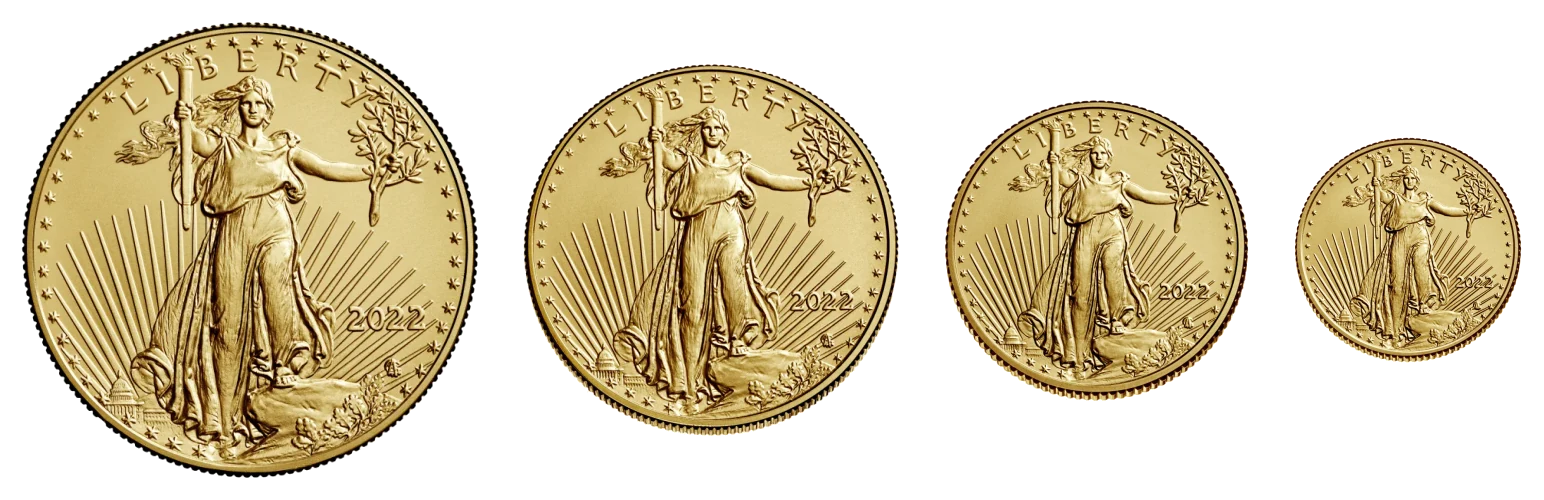
- 1 oz
- 1/2 oz
- 1/4 oz
- 1/10 oz
That is the whole explanation. It is not a markup penalty and it is not a sign of a bad dealer. It is arithmetic, and it applies at every dealer in the country.
What you get in exchange is divisibility. If you may want to sell part of a position rather than all of it, or if you are buying gradually over time, fractional coins give you that flexibility. If you simply want ounces at the lowest cost, buy one-ounce coins. Many buyers do a mix, weighting toward one-ounce pieces for the bulk of the holding.
How dealers price off spot
Gold does not have one fixed retail price. Dealers quote from the spot price, which is the wholesale price of raw gold in the global market, and then add a premium that covers refining, minting, distribution, packaging, insurance, shipping, and the dealer's own cost of doing business.
Spot moves continuously during market hours, so a quote is generally good only for a short window. When you lock a price, you are agreeing to a specific number at a specific moment. Expect the dealer to confirm the lock and to tell you what happens if you do not fund the order in the agreed time.
The premium varies by product and by size, and it also varies with supply and demand for that particular item. Two dealers quoting the same coin on the same day will differ mainly in their premium, not in their spot. The guide on gold premiums over spot explains the components in full.
How to vet a dealer
This matters more than which coin you pick. A first-time buyer's real risk is counterparty risk, not product risk.
- A physical location. A dealer with a real address, a showroom, and staff you can walk in and meet has committed something to the business that a website alone has not.
- A stated buyback policy. Ask what the dealer will pay for the same item you are buying, and ask before you buy rather than after. A dealer who makes a two-way market in what they sell has confidence in the product.
- Plain pricing. You should be able to see the spot reference and the all-in price for the item. If the pricing structure is hard to follow, that is information.
- Real people to talk to. You want a specialist who will answer a direct question directly, including when the answer is that a product is not right for you.
- Consistency between what is said and what is written. The confirmation should match the conversation.
Be cautious with any pitch that steers a bullion buyer toward high-margin collectible product on the argument that it is safer or exempt from something. Buy the category you decided you wanted.
Payment methods
Payment method affects price, because it affects the dealer's cost.
Bank wire and personal or cashier's check are typically priced best. Card processing costs the dealer a percentage of every transaction, and that cost is passed through, so card pricing is usually higher. Checks may need to clear before the order ships, which adds days to the timeline. Wires clear quickly but require a trip to the bank or an online transfer with careful attention to the account details.
None of this is unusual and none of it is a trick. Ask which methods the dealer accepts, what each does to the price, and how long each takes to settle.
Delivery or depository storage?
You have two reasonable homes for the metal.
Delivery. The coins ship to you, insured in transit, in discreet packaging. You take direct possession. From there, storage is your responsibility, which in practice means a quality safe bolted down and out of sight, or a bank safe deposit box. Check whether your homeowner's policy covers precious metals; many limit coverage sharply and require a separate rider.
Depository storage. The metal is held at a third-party depository under your name, insured, with documented ownership. You give up the immediacy of having it in hand and you pay a storage fee, but you avoid the security problem entirely and the metal is easy to sell without shipping it anywhere. Texas has its own state-affiliated depository, which is one reason Texas is a practical state in which to own metals.
Neither choice is wrong. Buyers who want the reassurance of physical possession take delivery. Buyers holding a larger position, or who expect to trade rather than hold indefinitely, more often use a depository.
American Gold Eagle compared with foreign bullion coins
First-time buyers often ask how the Eagle stacks up against the well-known foreign bullion coins: the South African Krugerrand, the Canadian Maple Leaf, the British Britannia, the Austrian Philharmonic. All are legitimate, widely produced bullion coins with real gold content.
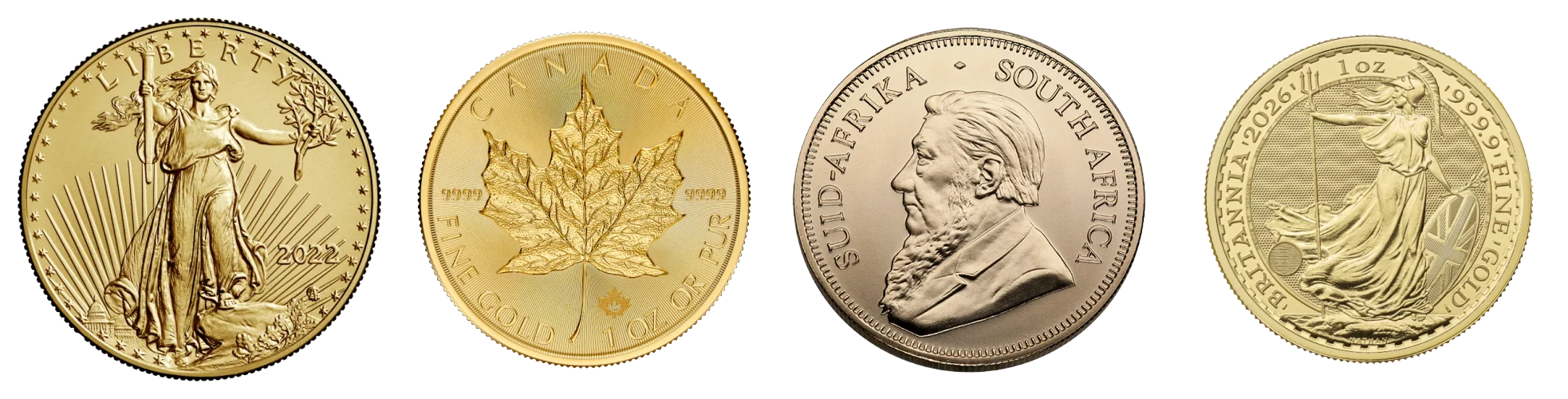
- Gold Eagle
- Maple Leaf
- Krugerrand
- Britannia
For a buyer in the United States, though, the Eagle has practical advantages that matter at resale. It is US legal tender, struck by the US Mint. Every dealer in the country knows it on sight, quotes it without hesitation, and keeps a standing bid for it. Foreign coins are also traded here, but the market for them is thinner, the buyback conversation is less routine, and the spread a US dealer will quote is generally less favorable than for the domestic coin. If your gold will eventually be sold in the United States, the American Gold Eagle is the coin that sells most easily. That is the reason to start there.
What documentation to keep
Keep records from the first purchase forward. It costs nothing at the time and saves considerable trouble later.
- The invoice, showing date, item, quantity, and price paid.
- Proof of payment.
- Shipping and insurance records, or the depository account statement.
- Grading certificates and certification numbers for any certified pieces.
- A simple running inventory listing each item, when it was acquired, and where it is held.
Knowing what you paid and when matters whenever you sell, and an heir handling the holding later will need to know what exists and where.
Anything touching how a later sale is treated for tax purposes is outside what a dealer can answer. This page is educational only and is not tax or legal advice — take those questions to your own tax professional.
Talk to a specialist
A first gold purchase is easier to get right with someone walking you through it than by reading alone. Texas Bullion Exchange staff can go over which products fit what you are trying to accomplish, explain how pricing and delivery work on a specific order, and answer questions about storage. Call 855-344-2646 to speak with a Texas Bullion Exchange specialist, or come by in person. Items are also available to purchase online once you know what you want.