
How to Sell Inherited Coins
Practical steps for handling an inherited coin collection: what not to do, how to inventory it, how appraisal works, and the options for selling.
If you have inherited coins and are not sure what to do with them, the order of operations matters. Do not clean anything. Inventory and photograph what is there before it moves. Get a written appraisal before you divide or sell anything. Then decide how to sell. Following that sequence protects the value of the collection and makes every later step easier.
First: do not clean anything
This is the most important instruction on the page, and the one most often ignored with good intentions.
Coins develop a surface over decades. On silver it is toning; on gold it is a subtle patina with the original mint luster underneath. That surface is original metal, and the market values it. Cleaning removes it.
Polishing cloths, silver dip, baking soda, toothpaste, erasers, and ultrasonic cleaners all do the same thing at different speeds. They strip a thin layer of metal and leave behind either a flat, lifeless surface or a field of fine parallel hairlines. Every experienced dealer and every grading service recognizes cleaning immediately, and the damage is permanent. On a coin whose value rests on condition rather than metal content, the difference can be the larger part of what it was worth.
The same caution applies to handling. Hold coins by the edge, over a soft surface, and only when necessary. Do not remove coins from mint packaging, original holders, or sealed grading holders. Breaking a grading service holder destroys the certification along with it.
If something is genuinely filthy, leave it filthy and let a professional look at it. Doing nothing is always a recoverable position. Cleaning is not.
Inventory and photograph before anything moves
Before coins are boxed up, divided, or driven anywhere, write down what is there and photograph it. It takes an afternoon, and it establishes what existed at the start — which matters when several heirs are involved, when an estate is being settled, and when items travel.
- Photograph the storage as found. Before opening anything, take pictures of the boxes, albums, and containers where they sit.
- Work through one container at a time. Keep original groupings together, because how a collector organized things is often information.
- Photograph each item or logical group. Both sides, at enough resolution to read the date, any mint mark, and any label on a holder.
- Record what a holder says. For certified coins, write down the grading service, the grade, and the certification number exactly. That number lets anyone verify the coin in the service's database.
- Note the packaging. Original Mint boxes, cases, and certificates of authenticity belong with their coins.
- Keep the paperwork. Old receipts, handwritten inventories, insurance riders, auction invoices, and letters can establish what was paid, when, and where a coin came from.
Store the inventory somewhere other than with the coins, and share it with anyone who has a stake in the outcome.
Understanding roughly what you have
You do not need to assign values to have a useful conversation with an appraiser. You need to know the scope, and sorting a holding into broad categories is something a non-specialist can do.
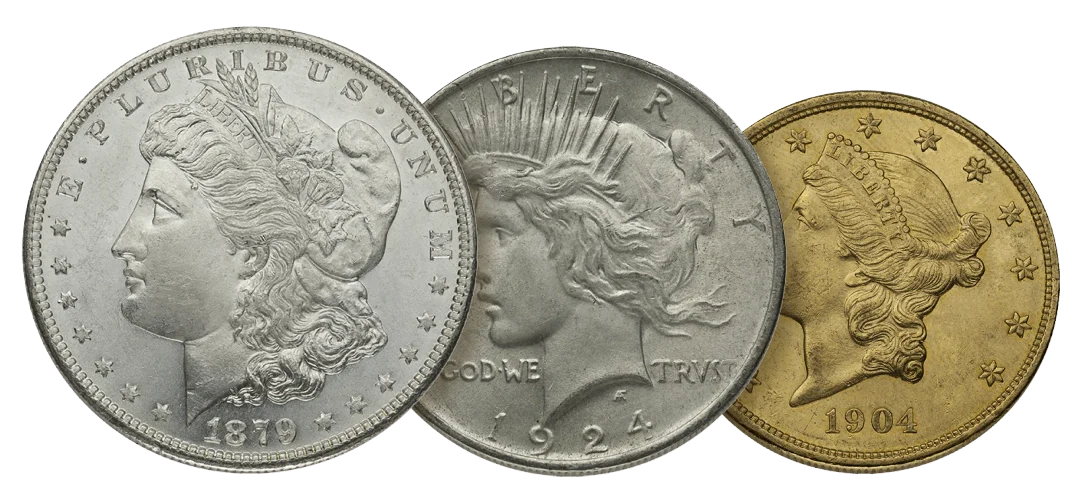
Silver dollars. Large silver coins, roughly an inch and a half across. Morgan and Peace dollars are 90 percent silver and 10 percent copper, weighing 26.73 grams gross and containing .7734 troy ounces of silver. Count them and note whether they look worn or crisp, without trying to judge grade. The Morgan silver dollar guide covers the series.
Gold coins. Anything gold deserves separate handling. The main categories are pre-1933 US gold in $2.50, $5, $10, and $20 denominations, all 90 percent gold, and modern bullion such as the American Gold Eagle at 22 karat and the American Gold Buffalo at .9999 fine. Note the denomination and the date. Pre-1933 US gold carries collector interest beyond its metal content, which is a reason not to treat it as generic gold.
Modern US Mint product. Proof sets, commemoratives, American Eagles in Mint packaging, and burnished issues. Keep sets complete.
Certified coins. Anything in a sealed holder from a grading service. Set these aside as their own group and record the certification numbers.
Everything else. Items you cannot place. Do not throw anything out. Let the appraiser look at all of it.
Resist the urge to estimate values from internet listings while you sort. Asking prices are not selling prices, and a wrong number in your head early will distort every decision that follows.
Why certified coins are simpler to settle
A certified coin has been examined by a third-party grading service, authenticated, assigned a numeric grade on the Sheldon scale, and sealed in a tamper-evident holder with a unique certification number.
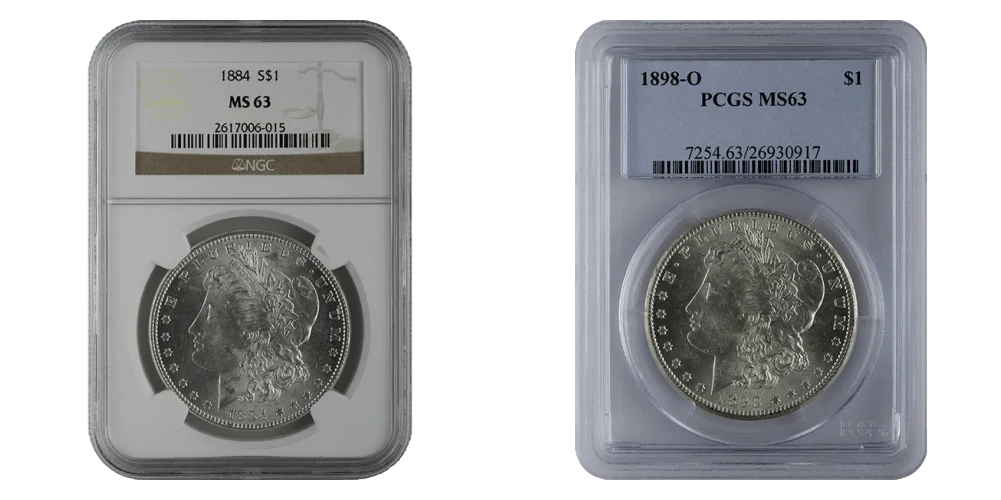
- NGC
- PCGS
For someone settling an estate, that does three useful things. It removes the authenticity question. It removes the condition argument, since the grade is on the label and both sides work from the same number. And it makes the coin comparable, because certified coins of the same type and grade trade against one another in an established market, so offers can be checked rather than accepted on faith. Certified pieces therefore generate faster, more consistent offers and are easier to divide fairly among heirs. The certification number can also be looked up in the grading service's public database, so a dealer in another city can quote from the label with confidence rather than asking for the coin to be shipped for inspection first. That widens the number of buyers an heir can reasonably approach. The guide on raw versus certified coins explains the distinction more fully.
This does not mean everything should be sent for certification. Grading costs money and takes time, and it makes sense only where the potential outcome justifies it. That is a judgment call an appraiser can help with, coin by coin.
The role of a written appraisal
This section is educational information only. It is not tax or legal advice. Texas Bullion Exchange does not provide tax or legal advice — how an estate should be handled is a question for the estate's attorney and your own tax professional.
A written appraisal is a document listing each item and its assessed value as of a specific date, signed by whoever prepared it. For a simple sale you may not need one. It is worth having when multiple heirs need a common basis for dividing things, when the collection will be insured while decisions are pending, or when an estate is being settled and someone has asked for the assets to be valued.
A formal estate valuation is not the same as a dealer's purchase offer. An offer is what one buyer will pay today. An appraisal is an assessment of value on a stated basis as of a stated date. Whether an estate needs a formal valuation, and what standard of appraisal will satisfy whoever is asking for it, is not something a dealer can determine. Ask the estate's attorney and your own tax professional before commissioning one.
Many dealers, including Texas Bullion Exchange, will evaluate a collection at no charge. Ask up front whether an evaluation is free, whether a written appraisal document costs extra, and whether accepting the appraisal obligates you to sell. It should not.
Options for selling
Three paths, each with real trade-offs.
Selling outright to a dealer. The dealer examines the collection and makes an offer for all or part of it. You accept or decline, and if you accept you are paid on the spot. It is fast and certain, with no waiting and no fees deducted later. The trade-off is that the offer reflects the dealer's need to resell at a profit and carry the inventory until they do. For a mixed holding of bullion and common material, this is usually the sensible choice.
Consignment. The dealer sells the coins on your behalf and takes a commission from the proceeds. It can produce a better result on items that need the right buyer. You wait, and you do not know the final number in advance. Understand the commission structure, who bears costs if an item does not sell, and how long the arrangement runs. Get it in writing.
Auction. The collection, or selected pieces from it, goes into a public auction with exposure to many bidders at once. For rare material this is often where the strongest prices happen. It is also slow, frequently several months from consignment to payment, and seller's fees apply along with possible photography, cataloguing, and insurance charges. Results are not guaranteed. Auction does poorly with ordinary bullion, where fees erode a thin margin.
Not every heir wants to sell. Where the decision is to keep the metal in the family, or to move part of the proceeds into gold rather than into cash, a specialist can also explain the Principal Protection Program, which locks in the original value of a qualifying gold position. Ask what qualifies rather than assuming an inherited piece does.
A reasonable approach with a mixed holding is to split by category: sell bullion and common material outright, and route the few genuinely scarce pieces to auction or consignment. An honest appraiser will tell you which pieces belong in which bucket, including when the answer is that none of them justify auction.
What to bring to an appraisal appointment
- Everything, as you found it. Do not pre-sort into what you think is valuable. Appraisers find overlooked items regularly.
- Original holders and packaging, left sealed: Mint boxes, certificates of authenticity, albums, grading holders.
- Your inventory and photographs.
- All paperwork. Receipts, old appraisals, auction invoices, insurance riders.
- Photo identification. Dealers are required to verify identity for transactions.
- Estate documentation, if applicable. Letters testamentary or whatever demonstrates your authority to act for the estate. A dealer cannot buy from someone who cannot show they have the right to sell.
- A list of your questions, written down beforehand.
Call ahead. A large collection may need a scheduled block of time, and if significant gold is involved the appointment should be arranged in advance.
Common mistakes
Cleaning. Covered above, and worth repeating because it is the most frequent and the least reversible.
Splitting the collection blindly. Value is not distributed evenly across a collection. Appraise first, divide second.
Selling a certified coin as scrap metal. A coin whose value rests on rarity and grade, sold to a buyer who weighs it and pays a metal price, is the costliest single error in this process. Never sell certified material to a buyer who does not acknowledge the certification.
Shipping without insurance. If coins must travel, use insured, tracked, signature-required shipping with a carrier that covers precious metals, and confirm the coverage limit before sending. Standard shipping insurance often excludes coins and bullion. Where practical, deliver in person instead.
Accepting the first offer. Get more than one evaluation on a substantial holding. A reputable dealer will not object.
Taking an unsolicited approach. Estate notices and obituaries are public. Buyers who contact bereaved families directly and press for a decision on the spot are working an advantage. Deal with established businesses you sought out, on your schedule.
Rushing. Absent a court deadline, there is rarely a reason to settle a collection in a week.
Handling multiple heirs
Collections divided among several people go badly for predictable reasons, and the fixes are procedural.
Agree on one appraisal that every heir works from. Competing valuations obtained separately turn into an argument about the appraisers rather than about the coins.
Decide the method before you know the contents. Options include selling everything and dividing the proceeds, dividing by appraised value with cash equalizing the difference, or taking turns selecting with the appraisal in hand. Where feeling is running high, selling and dividing cash is usually the better route, because money divides exactly.
Put one person in charge of logistics, choose that person openly, and have them share the inventory and appraisal with everyone. Keep records of what was sold, to whom, for what, and when. Where the estate is complex or the parties are not in agreement, involve the estate's attorney before selling.
Get your coins appraised
Bringing in an inherited collection can be done at your own pace and does not commit you to selling. Texas Bullion Exchange staff will go through what you have, explain what each category is and how it would sell, and provide a written appraisal if you need one. Call 855-344-2646 to speak with a Texas Bullion Exchange specialist or to schedule an appraisal appointment. Bring everything exactly as you found it.
Everything on this page is educational only and is not tax or legal advice. For the estate, tax, and inheritance side of the decision, work with your own tax professional and the estate's attorney alongside your TBE specialist.